
A public address system is judged on three occasions: the ordinary day, the day someone has to find one person in a building of two thousand, and the day the fire panel trips. The same network has to handle all three.
A console with the zones on keys, so a duty officer pages one building or the whole site without remembering an address list. Handheld and wireless microphones cover the days when the announcement has to be made from the car park rather than the control room.
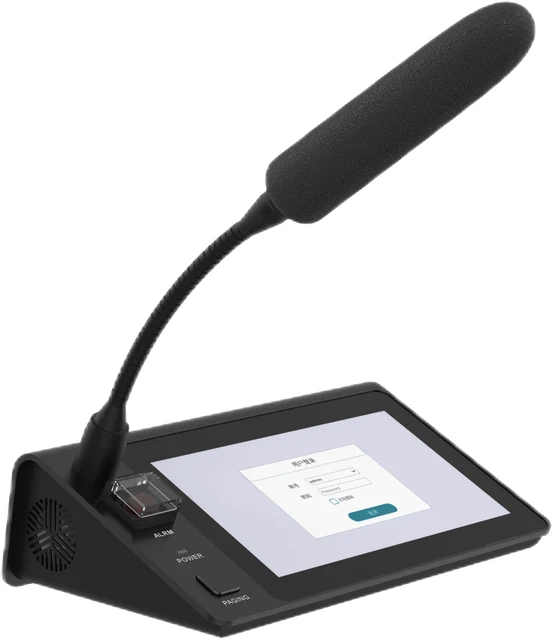
Timed tasks run without anyone present: the bell, the shift change music, the closing announcement. Text can be converted to speech for the routine messages, which keeps a recorded voice consistent.

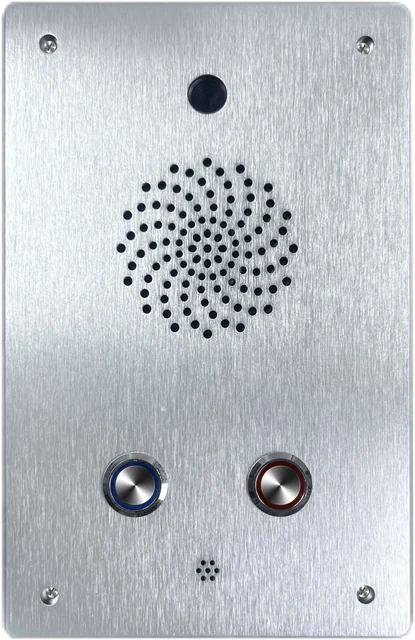
Paging from a phone app or a remote terminal means the person who knows the message does not have to walk to the control room first. The same two-way terminal, with its own camera and call button, is what a help point uses when a visitor presses it.
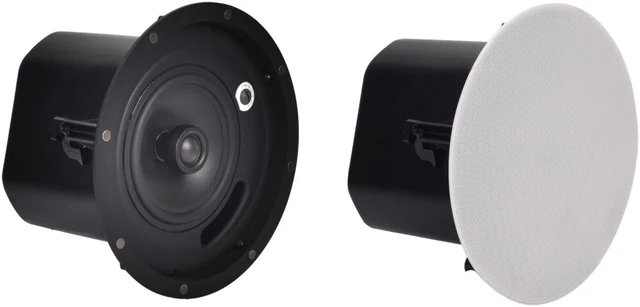
PoE ceiling speakers for corridors, classrooms and offices: one cable per speaker, no separate amplifier feed, and the layout follows the ceiling grid rather than the furniture.
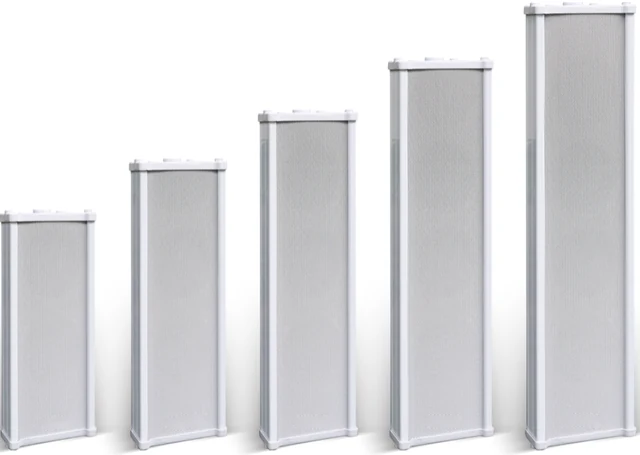
IP66 column speakers along a facade, horns across a yard. Outdoor coverage is designed for distance and wind, not for the same density as an office ceiling.
Network terminals and speaker controllers report load and line status, so a failed circuit shows on the screen instead of waiting to be walked past. Terminals sleep when there is nothing to play, which removes idle hiss from quiet rooms.
When the fire system sends the signal, everything else stops: background music and the current announcement are cut, and the emergency message goes to the evacuation zones for that floor or building.
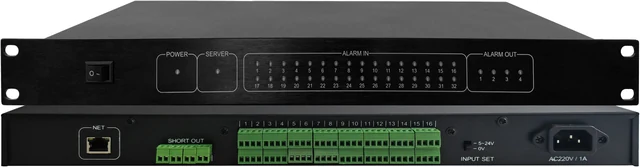
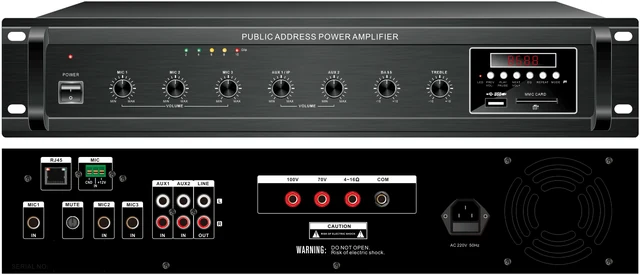
Emergency lines are usually on their own amplifier, so a fault in the music circuit does not take the evacuation message with it. That split is decided at quotation time, not on site.
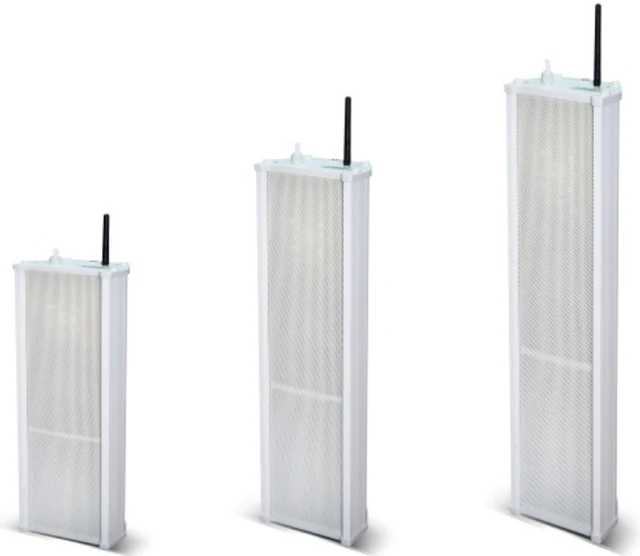
Where the site has several buildings and no cable between them, a self-contained speaker with its own 4G link covers the case where the network is the thing that failed.
Zones are defined once and used by all three: paging, scheduled music and the fire message all address the same speakers. That is why the zone list, the speaker schedule and the amplifier split are quoted together — a system where the fire message reaches a different set of speakers than the paging does is a design fault, not a wiring detail.
Classrooms, corridors and playing fields on one schedule and one bell.
Ward corridors and outpatient areas, where the message has to be quiet and clear.
Indoor halls and outdoor yards, high ambient noise, shift-change announcements.
Concourse and platform paging, with the fire message on the same speakers.
Send the floor plan, the number of zones and the city the project is in. We reply with the models, the price and the lead time — or say plainly that the line is outside what we supply.