
Three systems determine whether a meeting room works: everyone is heard, the room is covered evenly, and the papers are on the desk instead of in a folder. We quote all three from the same rack, the same network and one schedule.
Gooseneck units on the table, one per seat. Wired units run daisy-chained or on network cable; wireless units use 5 GHz Wi-Fi or U-band, which is usually the only option in a listed heritage building where nobody will let you chase the floor.
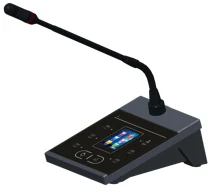
The host runs the speaking modes the chair actually asks for: first-in-first-out, last-in-first-out, all open, a fixed number of open mics, chairman-only, or voice activation. Recording to USB is a switch, not a separate recorder.
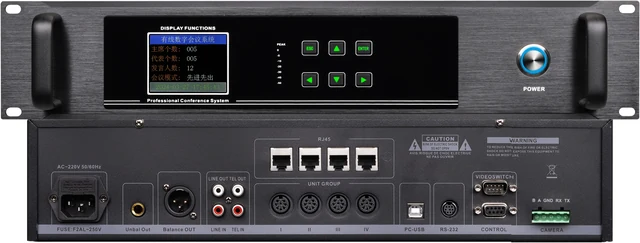
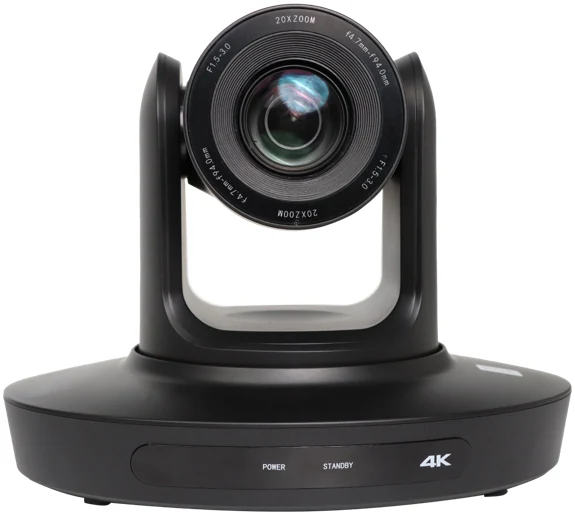
Camera tracking follows the live microphone, so a remote participant sees who is speaking without someone driving a joystick. The same host can hand the recording to a streaming or archiving box.
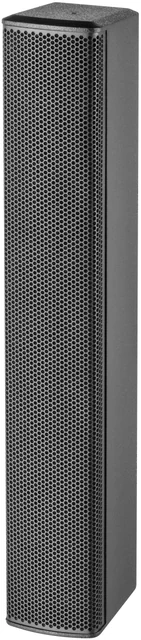
A boardroom requires a different loudspeaker from a multi-function hall. Column arrays keep speech intelligible off the back wall; a full-range cabinet does the work in a wider room. The choice is made from the room drawing, not from what is in stock.
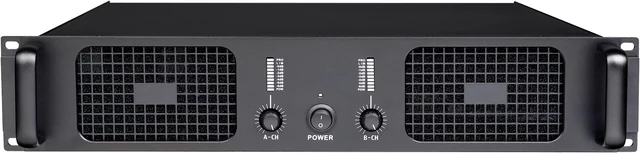
Class-H amplification sized with margin above what the room needs, so speech peaks are not clipped when the chair raises their voice. Bridged and multi-channel options cover both a single hall and a rack feeding several rooms.
A networked audio processor holds echo cancellation, feedback suppression, noise reduction and automatic gain control. Presets are saved per room, so the next meeting starts from the same settings as the last one.

Reinforcement is quoted against the Chinese hall standard GB 50371, which is the document a local design institute will check the room against. Where a project has its own acoustic specification, we quote to that instead.
Participants open the agenda, the files and the previous minutes on a desk screen or a lift-up terminal. Sign-in and voting run from the same device, and the chair sees who has joined.
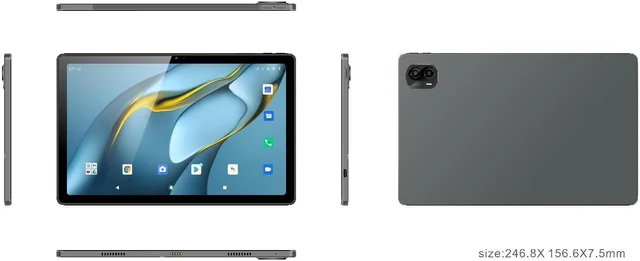
Documents are published from one place and withdrawn from one place, which matters when a paper is replaced an hour before the meeting. Access is per meeting, not per device.
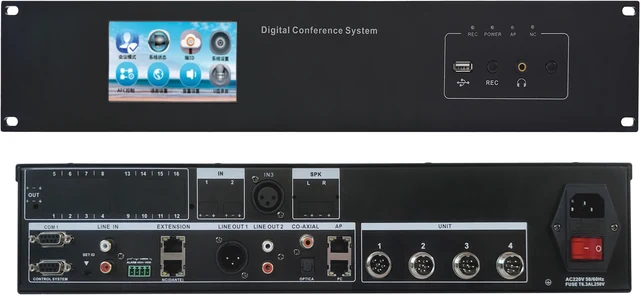
The recording, the attendance list and the vote results end up in one place. That is the part committees ask for six months later, and the part a paper process never produces cleanly.
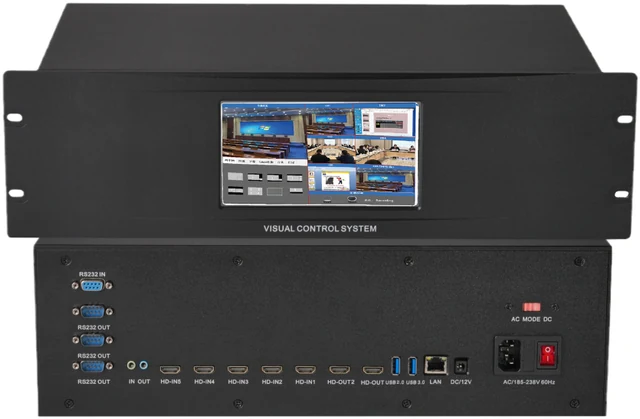
One rack, one network, one schedule. Discussion, reinforcement and paperless desks are quoted as a single bill of materials, so the audio processor is sized for the loudspeakers that were actually chosen, the desks are cabled to the same switch as the host, and the room is handed over with one settings file instead of three.
If a project only needs one of the three — a small committee room that already has a sound system, or a hall that needs paperless desks but no discussion units — we quote that part on its own.
Twelve to thirty seats, camera tracking, recording, paperless agenda.
Reinforcement that has to work for speech, video and the occasional event.
Wireless discussion units, quick setup, no floor boxes.
Voting, sign-in, archive and a record that can be produced later.
Send the room drawing, the seat count and the city the project is in. We reply with the models, the price and the lead time — or say plainly that the line is outside what we supply.